




Written and photographed by Marvin Stammel of Flex, Rocks & Rollovers
Back in Malaysia! But This Time, the Jungle Became My Home
After three flights and 34 hours of travel, I finally landed in Kota Kinabalu - the gateway to Sabah on the island of Borneo. This region is home to the oldest rainforest on Earth and one of the most brutal environments for off-roading and camping during monsoon season.
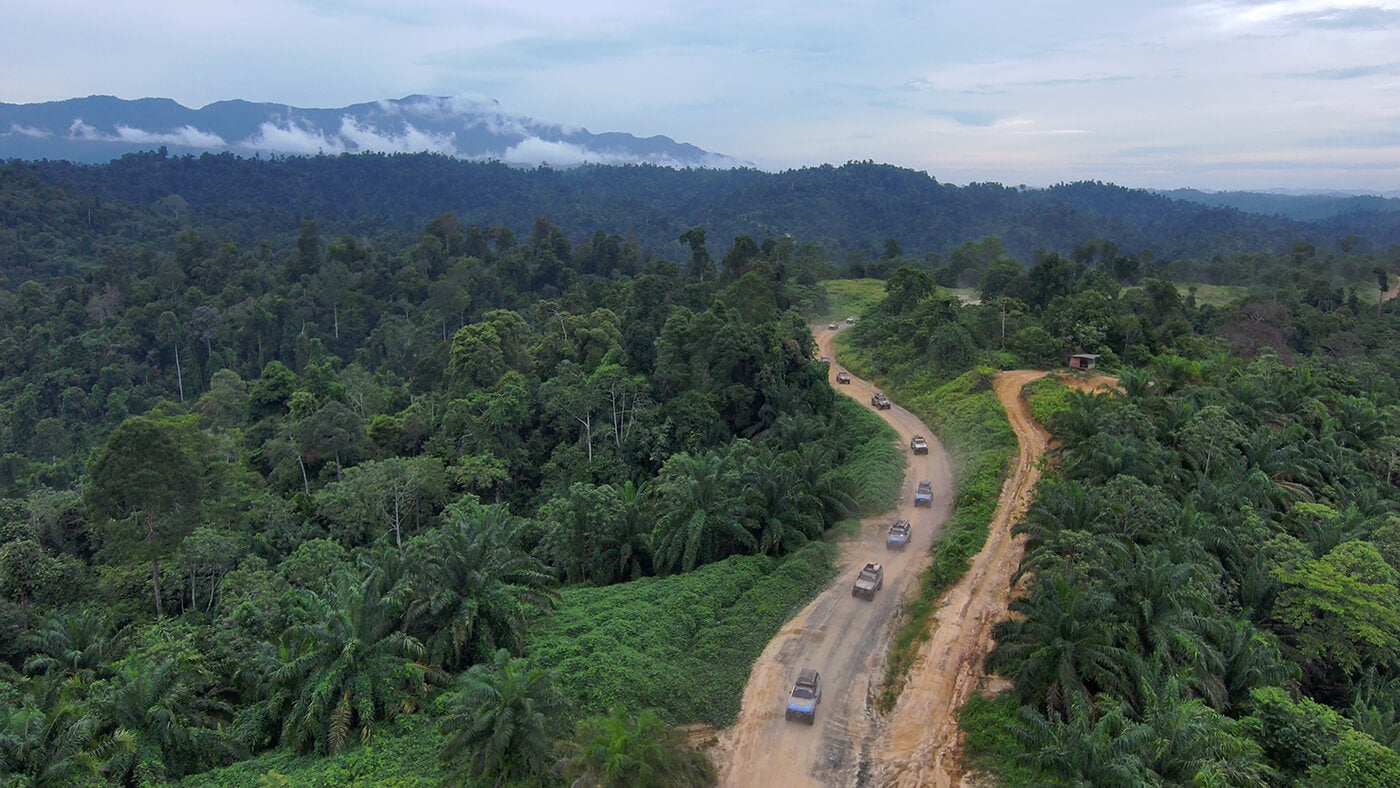
I came here to document the 33-year-old Borneo Safari, one of the world’s most iconic off-road expeditions: eight days of jungle travel, racing stages, river crossings, mud, heat, and miles upon miles of rough terrain. Hundreds of off-roaders from around the world take part every year, and this time, I was joining them.
But my adventure started earlier than expected.
My luggage didn’t arrive. No clothes. No equipment. And no ENO JungleNest Hammock, which I planned to sleep in for eight straight nights in the rainforest.
Thankfully, I had arrived three days early to adjust to the time difference. Those “buffer days” quickly turned into waiting for my gear to arrive. During that time, I explored Kota Kinabalu (the Capital City), learned about the local tribes, and enjoyed Sabah’s incredible street food. It was the calm before the storm.
On the very last day before the event, my luggage finally showed up, hammock system included. Just in time for things to get real.

Flag Off: Where the Adventure Truly Begins
The Borneo Safari kicks off with a massive celebration in downtown Kota Kinabalu. Over 1,400 off-road vehicles line the streets: Land Cruisers, Hiluxes, Suzuki Samurais - all ready to disappear into the jungle for a week.
After the opening ceremony, I met my driver, Sam, and climbed into our media vehicle: a well-worn but well-built 1980s Toyota Land Cruiser that would become our home base for the next eight days.
Our first campsite of the trip was at a local sports field in a rural village bordering the jungle. Two years ago, at a similar event, I slept on a cot like everyone else and spent ten nights waking up uncomfortable, sweaty, and covered in condensation. I promised myself I’d never do that again.
This time, I pulled out my ENO JungleNest Hammock and instantly felt the difference. I hung it between two anchor points under a shelter. Super easy. Just airflow, comfort, and the first great night of sleep before the madness began.

Into the Jungle: Eight Days of Mud, Rain & Movement
Day two delivered exactly what the Borneo Safari is famous for: unpredictable adventure. We drove 6–7 hours on washed-out logging roads, through steep jungle climbs, slippery clay, and nonstop humidity.
As the sun went down, the convoy suddenly stopped. I walked forward past vehicle after vehicle, at least 70 rigs backed up. A bridge had collapsed. On one side: thick mud and a drop into a creek. On the other, a steep climb out. It took four hours of teamwork and winching to get everyone across.

By the time we reached camp, it was pitch-black, raining hard, and the jungle was too dense to camp without clearing space. Dozens of participants chopped vines and branches to flatten just enough ground for tarps and cots. Mosquitoes attacked every light source. Everyone looked exhausted.
Meanwhile, I set up my hammock in minutes.
Two trees, Helios Hammock Straps, JungleNest Hammock up, DryFly Rain Tarp overhead. Dry. Elevated. Safe.
No touching the ground where things crawl, slither, and bite. I slept peacefully while rain hammered on the tarp all night.

Life on the Move
The Borneo Safari is unlike any other off-road event I’ve seen. Every single day, the entire Convoy, including race vehicles, media, medical, support rigs, and chefs move to a new campsite. And every camp becomes a temporary village.
Each day looks like this:
• Pack up camp at sunrise
• Drive through 50–90 miles of jungle
• Race stages happen at every camp
• Set up a new camp in the evening
• Battle rain, mud, insects, and heat
• Sleep… if you can

The race cars complete multiple stages each day, while support vehicles struggle simply to reach the camps through deep mud and rough terrain. The jungle changes constantly! New river crossings, new ruts, new obstacles appearing every hour.
Through all of this, my sleep system became a secret weapon.
Why the ENO JungleNest Hammock System Made This Trip Better
1. Fast setup in constantly changing conditions
Every night we camped somewhere new: villages, jungle clearings, roadside pull-outs, and riverbanks. Some nights offered perfect trees. Others didn’t.
The Helios Hammock Straps turned roll cages, roof racks, secure metal beams, and structurally sound poles into reliable anchor points. Their adjustability made it easy to dial in the perfect distance and tension between almost any two objects, no matter the situation. Every night, I had a comfortable setup… no matter what.
2. The DryFly Tarp saved me from monsoon rain
It rained every single night. Sometimes for hours. No matter what, the tarp didn’t let any water through and kept me completely dry, while many around me woke up soaked.
3. The integrated bug net was a lifesaver
In Borneo, insects aren’t a nuisance… They're a force of nature. The JungleNest’s built-in bug net kept them all out, even during peak swarming hours and swampy areas. And the included spreader bar keeps the bug net out of your face and makes the inside nice and spacious.
4. Comfort matters more than you think
Eight days of jungle travel is physically exhausting. I filmed all day, hiked to race stages, stood in the rain, and bounced around on rough trails.
Being able to actually rest at night made a huge difference in my energy and mood.
5. It packs small and travels light
For international travel, especially long flights and tight luggage limits, every inch and ounce matters. The ENO JungleNest Hammock, Helios Straps, and DryFly Tarp all fit into a small, lightweight bundle that disappeared into my backpack.
Meanwhile, others struggled with:
• wet cots
• ground moisture
• snoring neighbors
• insects
• condensation
• lack of airflow
• uncomfortable sleep
• zero privacy
My hammock?
Dry, airy, private, comfortable - every night.

Reflections: What This Trip Taught Me
The Borneo Safari isn’t just an off-road event. It’s a cultural exchange, a survival challenge, and a once-in-a-lifetime experience. I traveled with people from Malaysia, Thailand, India, New Zealand, Japan, China, Indonesia, and the Philippines. We shared food, stories, music, and long muddy hours deep in the rainforest.
But what made this trip truly special was the balance between hardship and comfort.

The jungle never lets up! The heat, the rain, the terrain, the insects. But at night, in my hammock, everything felt peaceful. I’d listen to rain on the tarp, insects buzzing in the distance, and the soft hum of generators far away at camp.
I didn’t just “get through” the Borneo Safari… I actually enjoyed it. And a huge part of that came down to good sleep, night after night.
I’ll never go back to ground camping in the jungle again. Anywhere this kind of adventure takes me next, my hammock system is coming with me.
Author Bio
Marvin Stammel is the creator of the YouTube Channel, Flex, Rocks & Rollovers. He has been obsessed with Jeeps, camping, and off-roading since he was a kid growing up in Germany. For the past 12+ years, he's turned that passion into a full-time career. He travels the world filming extreme off-road adventures, often in some of the toughest environments on the planet - which is why the right gear (especially sleep systems) truly matters.
From Campus Lounging to Classroom Calm: My Journey Across Disciplines with ENO Hammocks
Meet the Artist Behind Our Shibori DoubleNest Hammock Print, Natali Jackson