




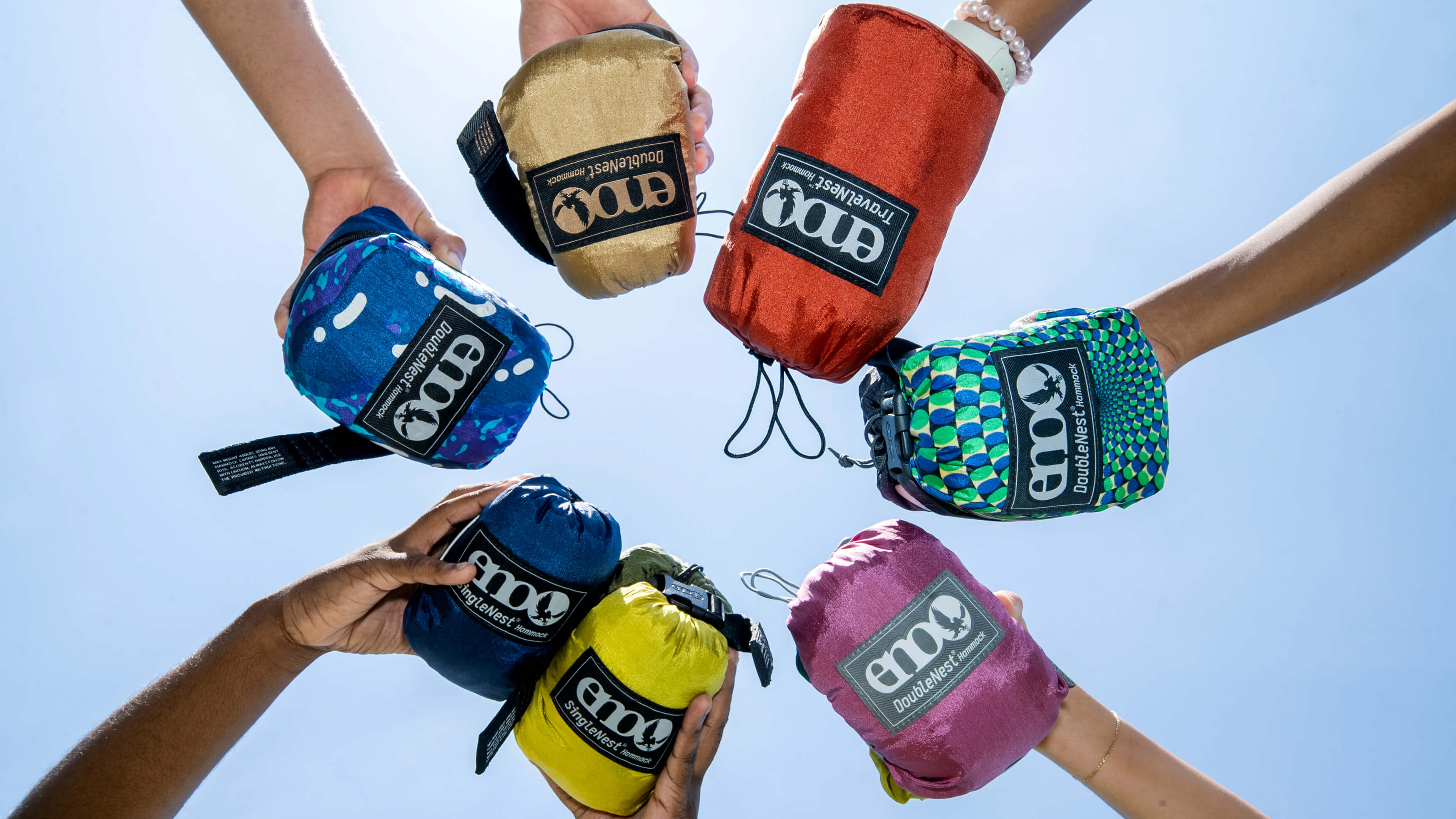
Before summer sneaks up on you, now’s the time to get your hammock and outdoor gear ready for adventures. A little prepping means more relaxing, fewer surprises, and way more time outside.
Here’s your quick Spring Get-To-Do List.
✔ Take Inventory of Your Gear
There’s nothing worse than setting up at camp and realizing your fuel is almost empty. Cold hot dos anyone? Take the time to go through and see what you’ve got. If you’re type A, you can create a checklist or spreadsheet to use year after year and track maintenance. If you’re type B, a quick visual check to make sure you still got it and its in working order should suffice.
Taking inventory ensures you're not buying any redundant gear, and can replace anything that may be missing.

UGC Photo submitted by @ambereastcoast
✔ Inspect Your Gear for Wear and Tear
You should be doing this before every use, and especially right now. Fully inspect your gear. For any ENO hammocks, hammock accessories, or other gear, this includes the carabiners, rope, guylines, and fabric for snags, fraying, discoloration, or anything unusual from the time of purchase.
For small holes under 2 inches, check out our Hammock Repair Kit. Anything larger, and it should be replaced. If you find discoloration, discontinue use immediately. This is due to UV damage and can lead to the hammock tearing. If a carabiner is bent, or the wiregate won’t close - discontinue use. You can find replacement aluminum carabiners here.
Need to replace something else? Check out all ENO replacement parts.
If anything suspect is found during the inspection, please discontinue use and check out our HangTough Guarantee. We also offer repair and recycling programs.
For other gear, it can be replacing batteries, cleaning dirty items, restocking perishables, and organizing your storage.

✔ Clean Your Hammock and Gear
Spring cleaning isn’t just for closets. It’s for your gear too. Winter storage can leave your gear dirty, damp, or forgotten. Here’s how to wash your hammock:
1 - Remove carabiners
2 - Wash your hammock (alone), with cool water and mild detergent on a delicate cycle in a front-loading washer. When in doubt, handwash in the sink or bathtub.
3 - Air dry on a sunny, breezy day or indoors with good airflow
4 - Store your hammock in a cool, dry place outside of direct sunlight
Looking to wash something else? Check out our product-specific instructions and care.
In general, spot cleaning or handwashing gear with mild detergent and air drying is best.
For more hammock care tips, check out this video we made in partnership with Fridie Outdoors.
✔ Organize Your Gear Closet
Now that you’ve ensured your gear is clean, sage, and ready to go, you can organize it. Be sure to store it in a cool, dry place outside of direct UV light. We recommend putting it somewhere easy to access - just in case you decide to go on a last minute expedition. Whether it's an afternoon at the park or a multi-day hike, finding the gear you need easily sets the tone for a good trip.
Have a ton of gear? Clearly labeled plastic totes and being consistent with where you store items can be a game changer. We recommend a tote for necessities (cooking fuel, stove, TP, batteries, headlamp, first aid, and hydration), a tote for sleep systems (tent or hammock, tarp, sleeping bag or topquilt), and one for everything else that’s nice to have but not totally necessary.

✔ Plan Your First Trip
Spring prep isn’t just about cleaning and inspecting things, it’s about planning. Text your friends to set a date, booj the campsite, block the calendar, and double-check you’ve got the gear on your packing list.
The earlier you lock it in, the more likely it happens. And nothing beats the anticipation for that first trip of the season.
Why Spring Gear Prep Matters
Taking the time to clean, inspect, and organize your camping gear now means fewer last-minute fixes, longer-lasting gear, and more time for relaxing the rest of the year.
Why the TravelNest Hammock Makes the Perfect Gift
Protect Your ENO Hammock With the Overcast Hammock Cover